Saturday, March 12, 2011
Christmas Cake Ebook
Thursday, March 10, 2011
Woodland Glow
Stock your fireplace with an assortment of candles on silver stands, then add greenery and pinecones for a woodland backdrop. Long glass icicles hanging from the mantel provide a frosty valance for the setting below.
Better Homes and Gardens
I always wished I had a fireplace to decorate at Christmas. My brother has one and he always does a great job decorating it! Not bad huh?
Better Homes and Gardens
I always wished I had a fireplace to decorate at Christmas. My brother has one and he always does a great job decorating it! Not bad huh?
Snowmen Luminarias
I thought these were so adorable. I used to set out luminaria's years ago, but nothing as cute as these. This idea comes from Better Homes and Gardens.
What You Need:
•Round fishbowls
•White frost spray paint
•Orange oven-bake clay, such as Sculpey
•Golf tees
•Glass baking dish
•Black glass paint
•Paintbrush
•Silicone glue, such as E6000
•Crafting mesh
•Work gloves
•Old scissors
•Ruler
•Round can, such as an oatmeal container
•Ribbon
•Tea candle
Instructions:
1. In a well-ventilated work area, spray-paint the fishbowls. Let dry.
2. To make a nose, form a carrot shape from orange clay. Push a golf tee in the wide end for extra strength. Place on baking dish. Bake in the oven according to the manufacturer's directions. Let cool.
3. Glue a clay nose on each fishbowl. Let dry. Use glass paint to make the eyes and mouth. Paint quarter-size dots for the eyes and smaller dots for the mouth. To make snowman winking, paint one eye as shown with eyelashes in the corner.
4. To make a hat, wear work gloves. Cut an 18-inch circle from crafting mesh. Center the mesh over the can. Form the mesh over the can, folding the edge into a brim. Tie a ribbon around the brim.
5. Put a tea candle in the luminaria. Place the hat on top of the luminaria.
What You Need:
•Round fishbowls
•White frost spray paint
•Orange oven-bake clay, such as Sculpey
•Golf tees
•Glass baking dish
•Black glass paint
•Paintbrush
•Silicone glue, such as E6000
•Crafting mesh
•Work gloves
•Old scissors
•Ruler
•Round can, such as an oatmeal container
•Ribbon
•Tea candle
Instructions:
1. In a well-ventilated work area, spray-paint the fishbowls. Let dry.
2. To make a nose, form a carrot shape from orange clay. Push a golf tee in the wide end for extra strength. Place on baking dish. Bake in the oven according to the manufacturer's directions. Let cool.
3. Glue a clay nose on each fishbowl. Let dry. Use glass paint to make the eyes and mouth. Paint quarter-size dots for the eyes and smaller dots for the mouth. To make snowman winking, paint one eye as shown with eyelashes in the corner.
4. To make a hat, wear work gloves. Cut an 18-inch circle from crafting mesh. Center the mesh over the can. Form the mesh over the can, folding the edge into a brim. Tie a ribbon around the brim.
5. Put a tea candle in the luminaria. Place the hat on top of the luminaria.
Wednesday, March 9, 2011
Fresh Looks For Christmas
Boston architect Mollie Moran spreads Christmas cheer all through her house with her fresh approach to decorating.
I enjoy looking at all the beautiful decorating ideas. They are so inspiring! These ideas came from Country Home.
Related articles
- Easy, Cheap Christmas Decorations for Your Door (socyberty.com)
- Tis the Season...Creating Memories (vickyhenry.wordpress.com)
Saturday, March 5, 2011
A Christmas Carol
This was the very first Christmas Carol movie I watched as a child. It was made in 1938. I remember being so afraid of the ghost of Christmas yet to come! One of my favorites!
Saturday, February 26, 2011
Boardgames and Photography #4 Tobago
Tobago designed by Bruce Allen and published in 2009 by a number of publishers, my copy is Zoch Verlag, is basically a treasure hunt. The modular board depicts an island with various types of terrain on it. Beach, grassland, forest, mountains and lakes. Players control an 'all-terrain vehicle' to journey around the island. The island also has some other features, namely, three palm trees, three huts and three stone statues which are really sturdy and well crafted items.
f5 1/30 ISO320 38mm focal length
As you can see they are nicely produced and give the board a really nice look when set up. Players have clue cards which they can play to reduce the likely location of the treasure. When it is reduced to just one possibility they can move their ATV there as fast as they can to retrieve said treasure.
f5 1/30 ISO280 46mm focal length
The stone idols are really nice, resin cast and have a nice weight. Whenever a treasure is raised the idols turn 60 degrees and an amulet is thrown up in a straight line on the coast of the island. Players can pick up these amulets, which have various powers and use them later in the game.
A very nicely produced game, with top class components which photograph well.
f5 1/30 ISO320 38mm focal length
As you can see they are nicely produced and give the board a really nice look when set up. Players have clue cards which they can play to reduce the likely location of the treasure. When it is reduced to just one possibility they can move their ATV there as fast as they can to retrieve said treasure.
f5 1/30 ISO280 46mm focal length
The stone idols are really nice, resin cast and have a nice weight. Whenever a treasure is raised the idols turn 60 degrees and an amulet is thrown up in a straight line on the coast of the island. Players can pick up these amulets, which have various powers and use them later in the game.
A very nicely produced game, with top class components which photograph well.
Wednesday, February 23, 2011
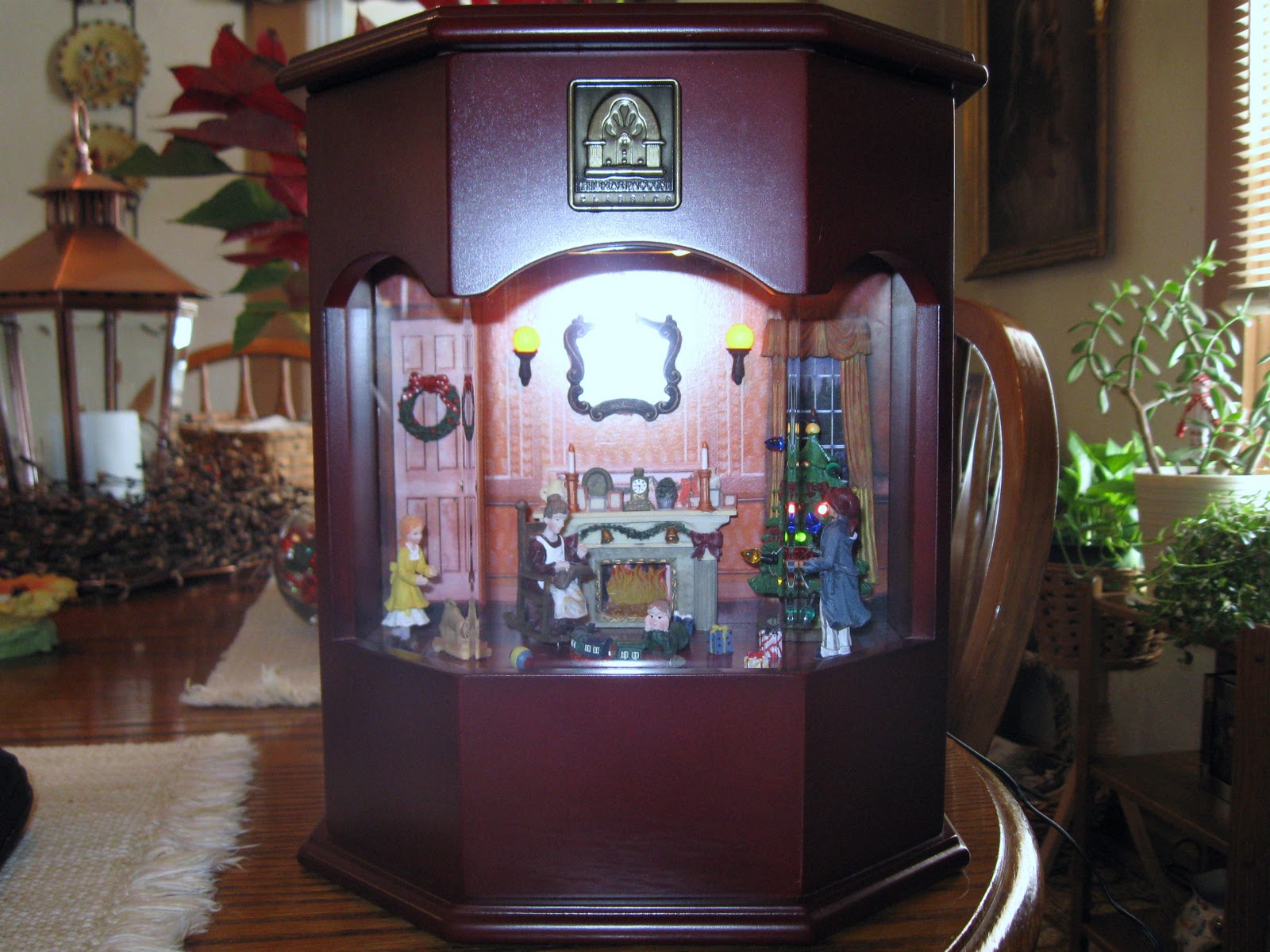
My Thomas Pacconi Music Box
What is a Music Box?
The music box is a 19th century automatic musical instrument that produces sounds by the use of a set of pins placed on a revolving cylinder so as to strike the tuned teeth of a steel comb. They were developed from musical snuff boxes of the 18th century and called “Carillons a Musique.” Some of the more complex boxes also have tiny drum and small bells, in addition to the metal comb. Alec Templeton, an avid collector of music boxes and a professional concert musician, once noted that the tone of a musical box is unlike that of any musical instrument.
History of the Music Box.
The original snuff box music boxes were tiny containers which could fit into a gentleman’s waist coat pocket. The musical boxes could have any size from that of a hatbox to a large piece of furniture though most were tabletop sized. They were usually powered by clockwork and originally produced by artisan watchmakers.
For most of the 19th century the bulk of music box production was concentrated in Switzerland, building upon a strong watch making tradition. The first music box factory was opened Switzerland in 1815 by Jeremie Recordon and Samuel Junod. There were also a few manufacturers in Bohemia and Germany. By the end of the 19th century some of the European makers had opened factories in the United States.
The cylinders were normally made of metal and powered by a spring. In some of the costlier models, the cylinders could be removed to change melodies, thanks to an invention by Paillard in 1862, which was perfected by Metert, of Geneva in 1879. In some exceptional models there were four springs, to provide continuous play for up to three hours.
The first boxes at the end of the 18th century made use of metal disks. The switch over to cylinders seems to have been complete after the Napoleonic wars. In the last decades of the 19th century however, mass produced models such as the Polyphon and others all made use of interchangeable metal disks instead of cylinders. The cylinder based machines rapidly became a minority.
The term musical box is also applied to clockwork devices where a removable metal disk or cylinder was used only in a programming function without producing the sounds directly by means of pins and a comb. Instead, the cylinder or disk worked by actuating bellows and levers which fed and opened pneumatic valves which activated a modified wind instrument or plucked the chords on a modified string instrument. Some devices could do both at the same time and were often combinations of player pianos and musical boxes, such as the Orchestrion, which is a large mechanical instrument resembling a barrel organ that produces sound in imitation of an orchestra.
http://en.wikipedia.org/wiki/Music_box
The music box is a 19th century automatic musical instrument that produces sounds by the use of a set of pins placed on a revolving cylinder so as to strike the tuned teeth of a steel comb. They were developed from musical snuff boxes of the 18th century and called “Carillons a Musique.” Some of the more complex boxes also have tiny drum and small bells, in addition to the metal comb. Alec Templeton, an avid collector of music boxes and a professional concert musician, once noted that the tone of a musical box is unlike that of any musical instrument.
History of the Music Box.
The original snuff box music boxes were tiny containers which could fit into a gentleman’s waist coat pocket. The musical boxes could have any size from that of a hatbox to a large piece of furniture though most were tabletop sized. They were usually powered by clockwork and originally produced by artisan watchmakers.
For most of the 19th century the bulk of music box production was concentrated in Switzerland, building upon a strong watch making tradition. The first music box factory was opened Switzerland in 1815 by Jeremie Recordon and Samuel Junod. There were also a few manufacturers in Bohemia and Germany. By the end of the 19th century some of the European makers had opened factories in the United States.
The cylinders were normally made of metal and powered by a spring. In some of the costlier models, the cylinders could be removed to change melodies, thanks to an invention by Paillard in 1862, which was perfected by Metert, of Geneva in 1879. In some exceptional models there were four springs, to provide continuous play for up to three hours.
The first boxes at the end of the 18th century made use of metal disks. The switch over to cylinders seems to have been complete after the Napoleonic wars. In the last decades of the 19th century however, mass produced models such as the Polyphon and others all made use of interchangeable metal disks instead of cylinders. The cylinder based machines rapidly became a minority.
The term musical box is also applied to clockwork devices where a removable metal disk or cylinder was used only in a programming function without producing the sounds directly by means of pins and a comb. Instead, the cylinder or disk worked by actuating bellows and levers which fed and opened pneumatic valves which activated a modified wind instrument or plucked the chords on a modified string instrument. Some devices could do both at the same time and were often combinations of player pianos and musical boxes, such as the Orchestrion, which is a large mechanical instrument resembling a barrel organ that produces sound in imitation of an orchestra.
| Stores six discs in the back of music box. |
http://en.wikipedia.org/wiki/Music_box
Subscribe to:
Posts (Atom)